
Studio Note · September 1, 2026
One Fluffy Fam episode has crossed 31.5 million public views. That is wonderful evidence that this little cat-family world can travel far—but it is not a sensible blueprint for every story we make next.
At the time of this note, our connected public catalogue contains 59 episodes and more than 63.5 million views. The largest chapter represents almost half of that reach by itself. If we copied only its surface details, we would be letting one exceptional result decide the personality of the whole family.
A hit is evidence, not a formula
We look at the most-watched chapter, but we also look underneath it. The median Fluffy Fam episode has about 186,000 views. Twenty-six episodes have passed 250,000 views, and six have passed one million. Those repeated wins tell us more about the strength of the world than a single peak does.
Inside the studio, we compare reach with audience reactions such as likes, comments and shares. We smooth those signals so that a very small video with a temporarily high reaction rate cannot outrank a mature story on a handful of interactions. Newer or low-view episodes remain provisional until they have had enough time and audience exposure to be compared fairly.
What the current catalogue suggests
The clearest repeatability signal is a storytelling window around 60–79 seconds. Episodes in the 70–79 second band currently show the strongest median reach, but the sample is still small enough that we treat it as a direction to test—not a rule and not proof that duration caused the result.
That distinction matters. A strong story can be helped by pacing, but pacing is not the same thing as a stopwatch. The family still needs recognizable roles, a clear piece of trouble, an emotional turn and an ending that feels earned.
What this changes in the studio
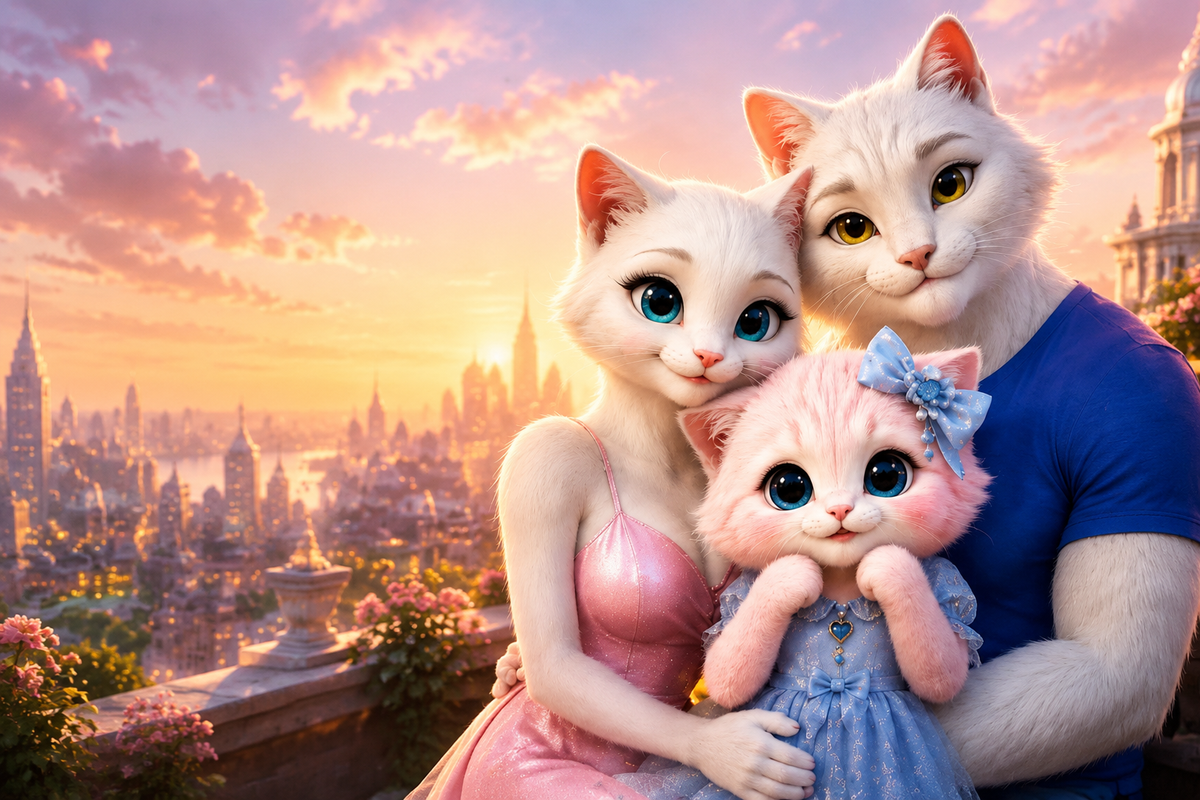
- We protect the recurring cast. Cat Mom, Cat Dad, Pink Kitten and Little Kitten keep recognizable instincts from chapter to chapter, while friends, rivals and guest characters can expand the world.
- We test repeatable structures. We study clusters of successful episodes instead of cloning one thumbnail, one setting or one joke.
- We separate public proof from private work. TikTok supplies public counters. A customer’s photos, brief, preview and private movie are not part of this catalogue.
- We keep editorial judgment in the loop. Hashtag captions cannot tell us who appears, what the conflict is or why an ending works. Those details must be reviewed from the actual story frames.
Why this matters for your cat’s guest role
A custom movie should not feel like a pet pasted into a random viral template. It should feel like your cat entered a world with its own memory, family dynamics and storytelling habits. Public performance helps us learn what holds attention; the approved photos, markings and personality notes help us make the guest star recognizable.
The moat is not one lucky post. It is the growing connection between a recurring cast, a catalogue of real audience response, careful story annotation and a private production process that can use those lessons without turning every cat into the same character.
Next in the Story Lab: we are tagging the catalogue by cast, conflict, setting, emotion and resolution so future chapters can learn from patterns the public caption alone cannot see.


