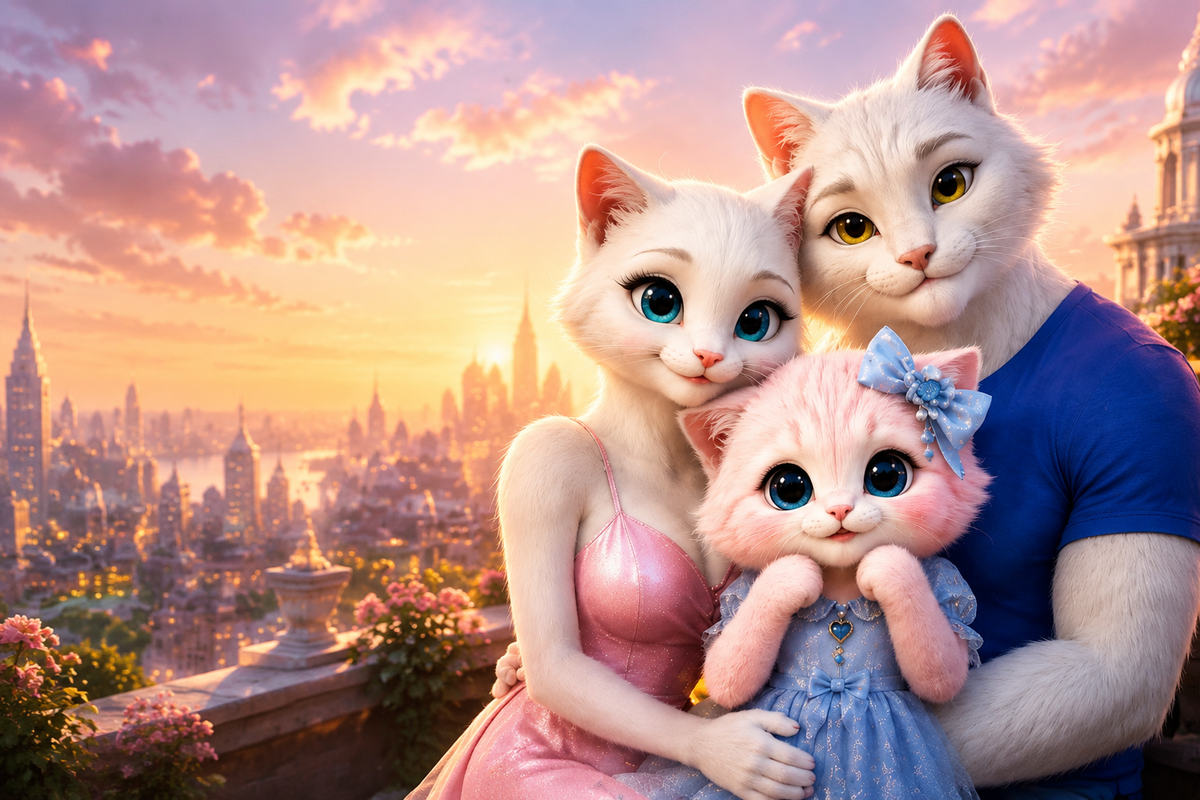
“Will it look like my cat?” is the right question to ask before ordering. The honest answer has two parts: the character should preserve the features that make the cat recognizable, and the result is still a stylized animated interpretation—not a frame-by-frame photographic copy.
Recognition begins with priorities
A cat can have dozens of visual details, but people usually recognize a smaller group first: the face shape, eye colour, ear shape, coat pattern, tail, body proportions and a familiar expression. The creative brief asks the customer to identify the features that must survive the style change.
This matters because a tiny cream chin patch may carry more emotional importance than a larger mark on the back. The studio should not decide that priority from image size alone.
References are compared as a set
One photo can be misleading. Warm indoor light can turn white fur cream; a phone lens can enlarge the nose; a turned head can hide asymmetrical markings. Front, side and full-body views are considered together so one distorted image does not define the character.
Personality references are treated separately from appearance references. A blurry image of a favourite head tilt may be excellent for behaviour even when it is poor for coat colour.
A character direction is more than one attractive frame
A single image can look beautiful and still fail as a movie character if the eyes, markings or proportions drift in the next scene. The production goal is a stable direction that can survive changes in pose, camera distance, lighting and location.
The studio checks recurring anchors such as:
- fur colour and the location of high-priority markings
- eye colour and the relative size of the eyes
- ear, muzzle and head silhouette
- body scale, tail shape and paw colour
- signature accessories that are part of the approved concept
Where variation can still appear
Generative production can introduce reasonable differences in fur strands, small background details, lighting and the exact shape of a moving expression. A stylized adventure scene may simplify a tiny patch that is not visible at that camera distance.
The goal is not mathematical identity in every pixel. It is continuity: a viewer should read the same guest star across the story without a major feature changing unexpectedly.
Human direction decides what to accept
AI-assisted does not mean “upload one image and publish the first result.” Human decisions shape the story, reference selection, character priorities, shot choices, review and final edit. Outputs that break the approved direction are corrected, replaced or left out.
Customers also have an important role. The brief should state the non-negotiable features before production, and the included revision should be sent as one clear list. “The left ear patch is missing in the kitchen scene” is more actionable than “it feels different.”
Choose the package with enough room for the idea
A 10–15 second Mini Cameo has one simple scene, which limits how many poses and locations must remain consistent. A 30–45 second Custom Story carries the character through two or three scenes. A Premium Episode adds more room and can include up to two pets, so scope and timing are confirmed after review.
More scenes create more opportunities for visual variation. That is why adding a pet, changing the approved setting or replacing the main source set is new work rather than a small correction.
The practical standard
A successful character does not need to be photorealistic. It needs to preserve the cat’s most important visual anchors, behave in a way that feels personal and remain coherent from the opening moment to the final frame.
Start with the Pet Photo Guide, then read How the Work Is Made for the studio’s production-transparency standard.